Friday, May 24, 2013

Pope Frank: Doing It His Way


The Pope’s comments on the capacity of atheists (and others) to “do good” leaves me confused. The Pope seems to saying three things:

1. All people have the capacity to do good, since all people are created in the image of God (Genesis 1:27);

2. Jesus’ death is redemptive for all humanity, whether or not one “believes;” and

3. All good people can “meet” in acts of goodness.

Very heady stuff, but I’m not exactly clear as to what it means. Let’s take up each point in turn.

1. All people have the capacity to do good. That itself is very liberal, as so many Christians believe that only those who are guided by God to the good can do the good. The Pope is saying that goodness is something we humans can discern without the help of God, or at least without believing in God, and I applaud him for that.

2. Is Jesus’ death redemptive for all of us, regardless of believe or lack thereof? This isn’t what the Gospel of John tells us: “For God so loved the world that he gave his only Son, so that everyone who believes in him may not perish but may have eternal life. (John 3:16)…. Those who believe in him are not condemned; but those who do not believe are condemned already, because they have not believed in the name of the only Son of God” (John 3:18).

In other words, just because Jesus died for all of us, only those of us who accept the redemption offered by Christ are saved. And, according to Catholic doctrine, that can be done only within the context of the Catholic Church: extra Ecclesiam nulla salus: "outside the church there is no salvation.”

So is the Pope saying there is salvation outside the Church, and even outside Christianity? I don’t see that in his statement. Atheists can do good, but without Christ and the Catholic Church salvation is something beyond their reach.

3. The notion that all good people can meet in acts of goodness only means that we can unite on social justice issues we have in common regardless of our beliefs. Nothing all that exciting here.

So what is the commotion? Until Pope Francis clarifies his understanding of redemption and salvation there is nothing to get excited about here. I look forward to his telling us more.

PS: If I have misunderstood Catholic doctrine on these matters, please set me straight in the Comments section. I do not pretend to be an expert in Catholicism (or anything else for that matter).

Tuesday, May 21, 2013

New Rabbis?


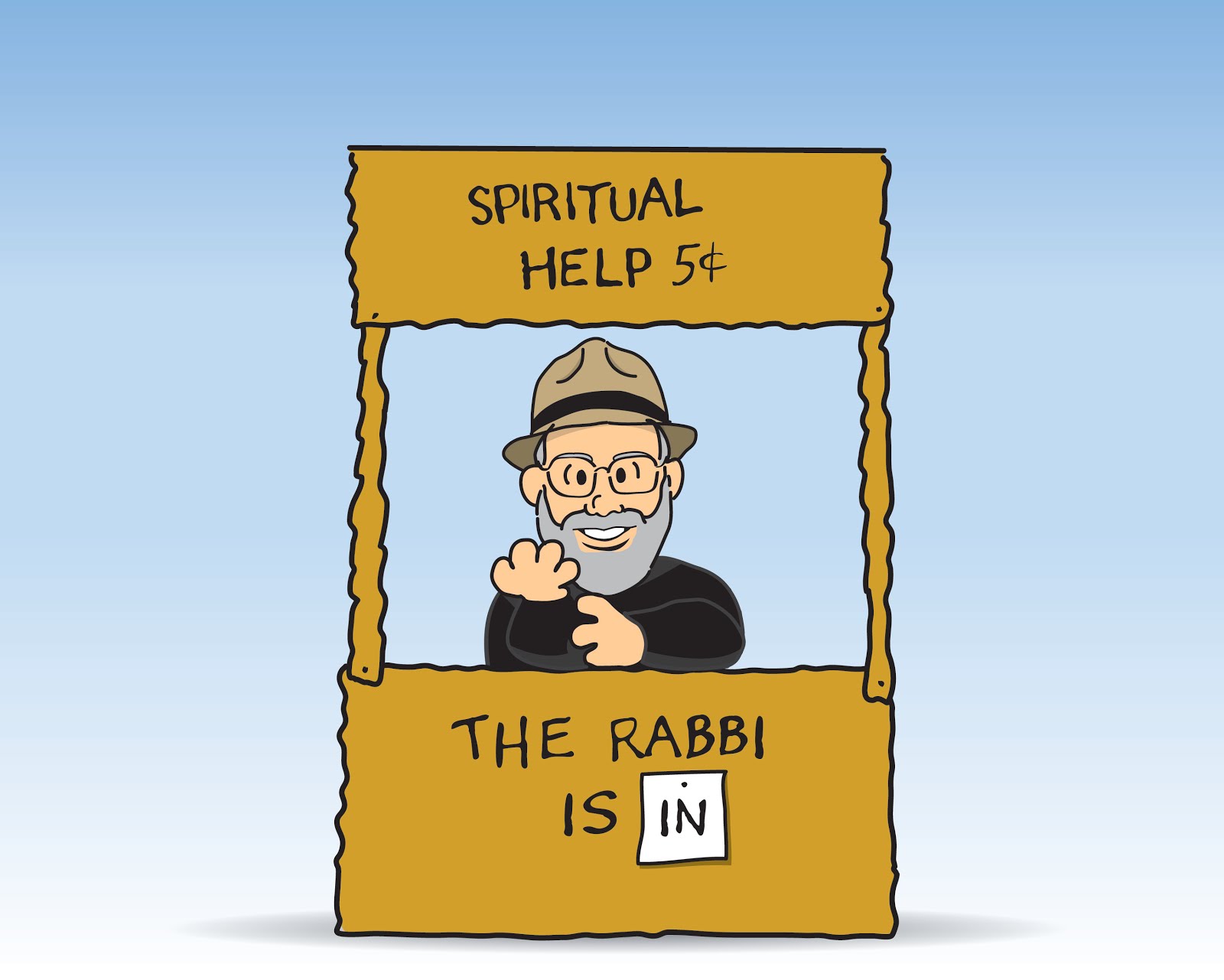
A recent issue of the Jewish Forward featured an article on new rabbis. The new rabbi is called to be: a scholar, educator, CEO, community organizer, pastoral counselor, chaplain, fundraiser, public speaker, etc., but what about this is “new.” Back in the late 1970s my colleagues and I drew up the same job description, and thought that we too were doing something new. We weren’t then, they aren’t now. And what’s worse, both then and now, is that the “spiritual” is still missing from the rabbi’s job description!

For decades our rabbinical schools and Jewish institutions have secularized the rabbinate in hopes of staying relevant to a largely secularized Jewish community. The problem is that the secular needs of our people are being well met by secular institutions and professionals. What isn’t being met is their need for meaning, wisdom, and spiritual depth. This is the work that rabbis should be trained to do, but are not being trained to do.

One of the things that was supposed to excite readers about the new rabbi was all the work opportunities open to them outside of congregational life: rabbis working as chaplains, social workers, CEO’s of non–profits, and more. I’m happy for new rabbinic grads that there are job opportunities for them outside congregational life, but the reason they need them is that the congregational structure of American Jewish life is failing. Rabbis are entering unusual jobs because the usual ones aren’t there.

You want something new? Try this:

Rabbinical schools should train rabbis to be wisdom teachers, spiritual mentors with the skills to help people make meaning out their lives, and contemplative practitioners who can teach the skills of meditation, prayer, chanting, and the like—skills that people desperately need to survive the madness of an America spiraling downward morally and a planet on the verge of ecological collapse, and that just might keep the worst effects of consumptive capitalism from becoming the norm.

Rabbinical schools should subsidize graduates (not all, but those with promise) and send them out to transform the world rather than get a job. Subsidized rabbis can dare to be bold. Instead of going to wealthy philanthropists to fund a new building project, rabbinic institutions should go to venture capitalists with business plans for transforming the world, and put their best and brightest in charge of these ventures.

There is a real need for rabbis, but not the rabbis we are training. And simply tricking new rabbis into thinking that what they are doing is new rather than training them to actually do something transformative is just mean.

Jesus is the answer. How sad.


The bumper sticker on the dirty Chevy S-10 in front of me says simply, “Jesus is the answer.” Its simplicity belies the enormity of its message: Jesus is the answer, so stop asking questions.

“Jesus is the answer,” and its equivalent thinking in other religions, is what’s wrong with religion in the early 21st century: it presumes to answer what cannot be answered; it presumes to know what cannot be known; it shuts down the human capacity to imagine and create and think outside the box whose very self-proclaimed importance depends on never opening it, let along thinking outside of it.

Religion up until now has been about answers. Wars were fought over competing answers. And once an answer got control of a society, that society’s ability to think and evolve died.

If religion has a future—and that may be a big “If”—it will have to reclaim the power to question. If clergy have a future, it will have to shift from being the caste with the answers to the caste that helps you sharpen your questions. If churches, synagogues, mosques, and temples have a future they will have to reinvent themselves from communities with answers to communities of shared questioning.

Monday, May 20, 2013

Stop Worrying About CO2 Levels


Here’s the cool thing about CO2 numbers that the Green Agenda folks don’t want us to know: in the end the amount of CO2 will fall, and fall to zero. Forget Bill McKibben’s 350 parts per million, how about no parts per million? You heard me, Tree Huggers—zero CO2. Now that’s clean air! And it’s coming. In about a billion years.

Sure that is a bit of a wait, but it’ll be worth it. Without CO2 there will be no greenhouse effect at all, and that means no plants, and without plants there will be no photosynthesis and that means no oxygen, and without oxygen there will be no animals or people, and that means no Animal Planet or reality television shows. Birds will hang on for a while, as will fish and insects, but by the time global temperatures rise to 130 degrees Fahrenheit these fellows too are gone. That leaves microbes hiding in the last vestiges of ice hugging the equator after the earth has titled on her access and Santa and his reindeer look like slabs of Slim Jim. And even the hearty microbe dies of thirst in about 2.8 billion years. So there is hope for this planet yet; if by “hope” you mean it’s turned into barren rock.

Of course by then we earthlings may be living on a Klingon outpost in another star system, or maybe the best of us have been raptured to be with Jesus in Heaven. As a Jew I prefer the former outcome, but not because I don’t love Jesus, I do; but because, like Hebrew, Klingon has that “ch” sound that the Rapture Ready cannot pronounce, and I think it would be fun to watch them order a smoking glass of chech’tluth at an upscale Klingon bar.

So as I crank up my AC to compensate for what promises to be a middle Tennessee summer modeled on the Amazon Rainforest, I look forward to knocking back a few steaming glasses of chech’tluth with my Klingon friends. 'LwlIj jachjaj!

Sunday, May 19, 2013

Beyond Worship


This morning I want to explore the message of three stories that hint at a religiosity for our time.

The first is the story of Abraham arguing with God over the destruction of Sodom (Genesis 18:25 ff). God wants to kill the innocent along with the guilty. Abraham insists that the Judge of all the Universe must himself do justly. In other words that Justice trumps God. Abraham wins.

The second is the wrestling of Jacob with the angel at Jabbok’s Ford (Genesis 32:22-30). As daylight comes the angel, who may well be God, begs Jacob to release him. Jacob agrees to do so only when given a blessing. The blessing is a new name, a new self-understanding: Yisra-El, one who wrestles with God and wins.

The third is the rabbinic story of Akhni’s Oven where God intervenes in a rabbinic debate over the kosher status of an oven and the rabbis, with one exception, tell God to back off citing Torah, lo bahamayyim he, the Wisdom we humans need is no longer in heaven, but in our hearts that we might live it (Deuteronomy 30: 12–14). God’s response to this rebuke is positive, “At last My children have defeated Me,” (Talmud, Bava Metziah 59b).

The message in all three stories is the same. God isn’t to be worshipped and obeyed, godliness is to be internalized and lived.

Most people didn’t get this and continued to worship God. In the Christian story God gets even more daring in “his” attempts to set us free. God incarnates as Jesus and then dies. It’s as if God is saying, “Look people, what more do I have to do to get you grow up? You’re like kids who refuse to leave home. I didn’t raise you to be dependent. What do I have to do? Die? Fine! I’ll die, and maybe then you’ll get the message.”

Of we didn’t get the message, and Christians await their God’s return.

The Prophet Micah summed up the entirety of God’s message this way: Do justly, love mercy, and walk humbly with your God,” (Micah 6:8). Our rabbis read into the meaning of “your God” rather than “our God” or simply “God” the teaching that even though we will continue to invent gods for ourselves, we should hold them lightly, and not take them too seriously. We should be humble in matters of theology and religion. Just the opposite is the case.

When Ecclesiastes tells us how best to live, he never mentions worship, and focuses on eating and drinking moderately, keeping our clothes clean and our hair groomed, finding meaningful work, and cultivating two or three good friends. So daring was this teaching, that later editors sought to undo it by adding a false summation about fearing God and keeping his commandments, something Ecclesiastes himself never said.

When Rabbi Hillel sought to sum up the entire Torah he made no reference to God at all, saying, “That which is hateful to you do not do to another.”
The Jewish writer Franz Kafka wrote in his book of parables, “The Messiah will come only when he is no longer necessary; he will come only on the day after his arrival; he will come, not on the last day, but on the very last.” The messiah will come only when we no longer need him; only when we have made the world right by ourselves. Then he comes to celebrate our achievement, not to do for us what is our task alone to do.

The reason the Jewish messiah has not yet come, and the reason why Jesus has not yet returned is that you and I have yet to do what is asked of us: beat our swords into ploughshares, our swords into pruning hooks; cease to learn war; and create a world where each of us sits unafraid beneath our own vine and fig tree (Micah 4:3-4).